


For years, my garage felt like a place where good intentions went to rest. I would step inside and see stacks of boxes, loose tools, and stray sports gear scattered across the floor like pieces of a puzzle that no one wanted to solve. Every time I thought about cleaning it, the task felt enormous. The idea of dedicating an entire weekend to sorting, sweeping, and organizing was exhausting before it even began. Like many people, I wanted a clean garage, but I did not want to spend my free time fighting clutter.
So I tried a different approach. Instead of planning a massive cleaning project, I focused on building small systems that would prevent mess in the first place. The goal was simple. I wanted the garage to stay clean without requiring constant effort. I wanted it to quietly organize itself through smart storage and thoughtful placement.
Over the course of a month, something surprising happened. I barely cleaned the garage at all, yet it looked better every week. Tools stayed where they belonged. Sports equipment stopped rolling across the floor. Boxes that once piled up suddenly had proper homes. The space felt calm, useful, and easy to walk through.
This was not about perfection. It was about designing a space where clutter had fewer chances to appear. By using simple tools and practical storage ideas, the garage slowly turned into a place that almost maintained itself.
What follows is the story of how a few thoughtful changes kept my garage clean for an entire month without traditional cleaning. It is also a lesson in how small systems can quietly shape everyday life.
Why Most Garages Become Clutter Magnets
Garages rarely become messy because people are careless. More often, they become cluttered because they lack structure. When items do not have clear homes, they drift across the space like leaves carried by the wind. A screwdriver gets left on a shelf. A basketball rolls into a corner. A box of holiday lights ends up stacked on top of another box that no one has opened in years.
Over time, this slow drift turns the garage into a crowded landscape of forgotten objects. The problem grows quietly. One day you walk inside and realize the floor is full, the shelves are crowded, and even the walls seem overwhelmed.
This is why traditional cleaning rarely solves the issue for long. You can spend hours sorting and sweeping, but if the space itself does not guide where items should go, the clutter will slowly return. The garage becomes messy again not because people fail, but because the system fails.
A cleaner garage begins with a simple principle. Every item needs a clear place to live. When storage is easy to see and easy to reach, people naturally return items where they belong. The space begins to guide behavior without requiring constant effort.
Instead of thinking about cleaning as a chore, it helps to think about design. A well-designed garage gently encourages order. When tools hang on a wall and bins are clearly labeled, organization becomes the easiest choice.
Once this idea became clear, the rest of the experiment started to fall into place.
Building Order With Simple Storage Systems
The first change I made was surprisingly small. I introduced stackable storage bins to replace the scattered boxes that once sat across the floor. These bins created vertical storage, which instantly opened up walking space and reduced visual clutter.
Stackable bins do something powerful in a garage. They turn loose collections of items into organized layers. Gardening supplies can sit in one container, sports equipment in another, and seasonal decorations in their own stack. Instead of searching through random piles, everything becomes easy to find.
The real benefit appeared after a few days. Because each bin had a clear purpose, items naturally returned to their correct places. A basketball no longer rolled across the floor because it belonged in the sports bin. Garden gloves stopped wandering because their home was already waiting.
This small shift changed how the garage behaved. The space stopped feeling chaotic. Instead, it felt calm and structured.
Another helpful step was using a simple label maker. Labels removed the guessing game from storage. A quick glance told me exactly where something should go. That small clarity prevented many items from drifting into the wrong places.
Within the first week, I noticed something unexpected. I was not cleaning more often. I was simply putting things back where they belonged. The garage stayed tidy because the system made order easy.
Letting the Walls Do the Work
Garages have a hidden advantage that many people overlook. They have large empty walls waiting to be used. When storage moves upward instead of outward, the floor becomes open and manageable.
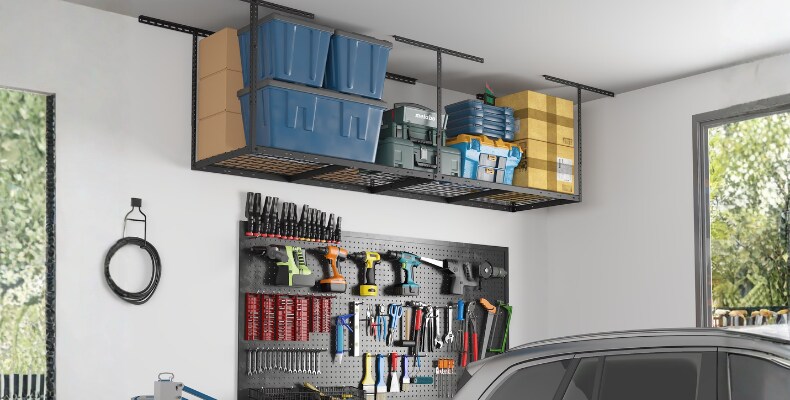
Installing pegboards transformed one entire wall of the garage. Suddenly tools had visible homes where they could hang neatly instead of disappearing inside drawers. Hammers, screwdrivers, extension cords, and small hand tools became part of the wall itself.
The beauty of pegboards lies in their flexibility. Hooks can move easily, which allows the layout to change as needs evolve. Over time, the wall becomes a map of daily tasks, where every tool is visible and ready to use.
Magnetic strips added another clever layer. Small metal items like screws, drill bits, and wrenches often vanish inside containers. With magnetic strips mounted beneath a shelf, these small pieces stayed visible and easy to grab.
Even tension rods found a place in the system. Placed between two cabinets, they created instant shelves for spray paint cans and cleaning supplies. No drilling was needed. The rods simply held items neatly in place.
With these small adjustments, the walls began carrying much of the organizational load. The floor no longer held the burden of every object in the garage.
Smart Storage for Everyday Chaos
Every garage contains a category of items that refuses to stay organized. These are the everyday objects that move frequently and rarely return to the same spot. Gloves, cords, small tools, and random supplies often become the source of constant clutter.
The solution was surprisingly simple. A clear plastic shoe organizer hung on the back of the garage door. Each transparent pocket became a small home for everyday essentials.
This organizer worked because it combined visibility with accessibility. I could see exactly where the work gloves were. Extension cords slid into their own pocket. Small tools stayed separated instead of tangling together.
Sports equipment also needed a better system. Balls have a habit of wandering across the floor like restless travelers. A simple wall frame made from horizontal bungee cords created a flexible storage net. Basketballs and soccer balls slid easily between the cords and stayed in place.
These solutions required almost no effort to maintain. Items naturally returned to their spots because the storage was quick and obvious. Over time, the garage stopped producing random piles.
The space felt lighter, calmer, and easier to use.
Looking Up: The Power of Overhead Storage
The final change involved the most overlooked space in any garage. The ceiling often sits empty while the floor struggles under the weight of bulky items.
Installing an overhead rack changed the balance of the entire room. Seasonal decorations, camping gear, and large storage boxes moved upward where they could wait quietly until needed.
One of the most reliable systems for this purpose is the Fleximounts GR48H Hooks 4′ x 8′ Overhead Garage Storage Rack. Built from cold rolled steel, it can hold up to 600 pounds of equipment and storage containers. Its adjustable design allows homeowners to choose the height that works best for their garage.
Once installed, the difference becomes immediately clear. Large items disappear from the floor and settle into the ceiling space above. The garage suddenly feels larger, even though nothing has been removed.
The rack also includes useful hooks that allow bicycles, ladders, or tools to hang securely beneath the structure. This combination of shelf space and hanging storage creates a powerful organizational system.
By moving bulky items upward, the garage floor becomes open and easy to walk through. The space feels organized without constant effort.
A Garage That Quietly Stays Clean
After one month, the experiment revealed something simple yet powerful. A clean garage does not come from endless cleaning sessions. It comes from thoughtful systems that guide everyday behavior.
Stackable bins created order. Wall storage freed the floor. Small organizers kept daily items from wandering. Overhead racks lifted bulky gear out of the way. Each solution worked quietly in the background.
The garage no longer demanded attention. It simply stayed organized because everything had a place to go. Walking inside felt calm rather than stressful. Finding tools became quick and easy. Even quick projects felt more enjoyable in a space that was easy to navigate.
The most surprising part was how little effort it required to maintain. Instead of fighting clutter, the space gently prevented it.
A garage does not need perfection to feel clean. It only needs systems that make order the natural outcome of daily life. With a few thoughtful adjustments, the space can remain tidy for weeks at a time, often without a single dedicated cleaning session.


