


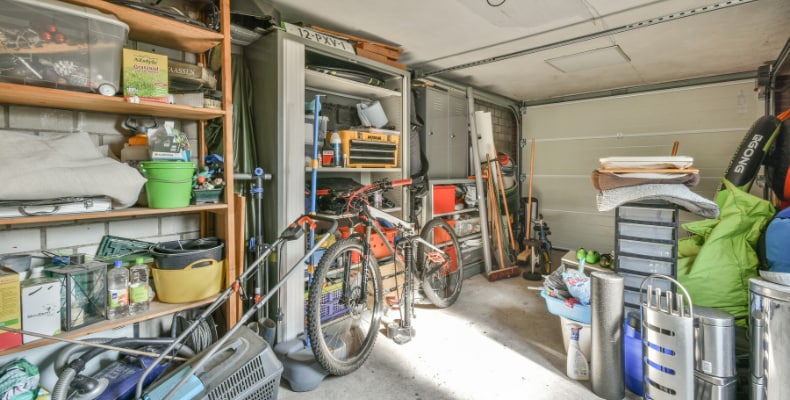
As children, we feared the darkness beneath our beds, the closet door left slightly open, and strange shadows stretching across bedroom walls. Growing up was supposed to make those fears disappear. Yet adulthood has its own collection of frightening surprises, from leaking roofs and mysterious odors to garages so crowded that finding a screwdriver feels like an archaeological expedition.
The monsters never really left. They simply relocated to the garage, where they thrive among damp cardboard, forgotten equipment, and possessions saved for an uncertain future. Behind every overflowing shelf lurks a familiar thought: I might need that someday.
At first, the clutter seems harmless. An old bicycle here, a broken lawn chair there, and a few boxes of things nobody remembers buying. Before long, the garage becomes a maze of forgotten belongings, leaving barely enough room to walk, let alone park a car. What once served as a practical extension of the home slowly transforms into a storage ground for abandoned hobbies, unfinished projects, and good intentions.
The real fright is not what hides beneath the piles but how easily clutter takes over valuable space. Fortunately, every monster has a weakness. With thoughtful organization, smarter storage solutions, and a willingness to let go, homeowners can reclaim their garages and restore order to the space.
Act I: Entering the Lair
Opening the garage door can feel like entering another world, particularly when the only light comes from a flickering bulb overhead. The air carries the sharp scent of old motor oil, damp cardboard, and grass clippings that have been decomposing since last summer. Somewhere between stacked storage bins and rusting bicycles lies a narrow path barely wide enough for one person. Spiders occupy the corners, while a forgotten rake waits to deliver an unexpected scare. These conditions are not merely unpleasant. Poor lighting, obstructed walkways, and accumulated debris increase the risk of trips, falls, and injuries. A cleaner, brighter garage makes everyday tasks safer and far less unsettling.
Act II: The Relics of Yesterday
Every crowded garage tells a story about the person who owns it. A stationary bicycle recalls an ambitious fitness plan, although its most recent workout involved supporting three winter coats. Half-empty paint cans preserve memories of renovations, while tangled cables belong to electronic devices that disappeared years ago. Letting these things go can feel surprisingly difficult because possessions often represent past ambitions, meaningful experiences, and imagined future projects. However, keeping everything creates a different problem: useful space gradually disappears beneath forgotten belongings. Start by sorting items into categories, identifying what you regularly use, what deserves donation, and what has become unnecessary. Preserving memories does not require preserving every object.
Act III: The Great Car Paradox
Few household situations are quite as ridiculous as parking an expensive vehicle outside while broken coolers and flattened cardboard boxes occupy the garage. Rain, sunlight, falling branches, and other environmental conditions can gradually affect a vehicle's exterior and interior. Meanwhile, objects with little practical value enjoy protected parking beneath the roof. The contradiction becomes especially amusing when homeowners repeatedly announce that they will clear everything out this weekend. Months pass, and the car remains outside. The solution begins with reconsidering the garage's purpose. Instead of treating its floor as permanent storage, prioritize essential functions, maintain clear pathways, and relocate infrequently used belongings to appropriate storage areas.
Act IV: Face-to-Face with the Beast
Determination arrives on Saturday morning, accompanied by trash bags, donation boxes, and the confidence of someone who has underestimated the project. Progress begins well enough until a rusted hinge appears. Should it be discarded? Could it become useful during a repair in 2034? Suddenly, one tiny decision consumes twenty minutes. This is the hidden challenge of decluttering: every object demands a judgment about its usefulness, condition, and future value. Set simple rules before starting. Discard damaged items that cannot reasonably be repaired, donate usable belongings, and recycle materials whenever possible. Work in small sections, and establish a time limit for uncertain decisions. A practical system prevents nostalgia from controlling the entire afternoon.
Act V: Reclaiming the Ceiling
Sometimes, the problem is not simply owning too much but storing everything in the wrong place. Garage floors are valuable working areas, yet seasonal decorations, camping equipment, and rarely used supplies often occupy them unnecessarily. Overhead storage offers another way to organize these belongings by using otherwise neglected ceiling space. The Fleximounts GR48 Classic 4' x 8' Overhead Garage Storage Rack provides a dedicated platform for storing suitable items above the floor. Its adjustable 22-to-40-inch ceiling drop creates up to 105 cubic feet of storage capacity, depending on the installation configuration. Raising appropriate belongings can also reduce their exposure to water accumulating on the floor.
Act VI: Building a Safer Storage System
Good overhead storage depends on more than finding an empty patch of ceiling. The Fleximounts GR48 Classic is rated to support 750 pounds and undergoes testing at 1,200 pounds, equivalent to 1.6 times its rated capacity. These figures describe product testing, not permission to exceed its stated working limit. Its long ceiling brackets attach to two ceiling joists, while six vertical posts contribute to the supporting structure. Thicker M8 screws and a connected frame with a wire deck are designed to provide stability. An installation template helps homeowners plan the layout. Before purchasing, check ceiling joist spacing, structural conditions, and installation requirements. Follow the manufacturer's instructions, distribute loads appropriately, and store only items suitable for overhead placement.
Conclusion: Learning to Coexist
The monster beneath the childhood bed wanted to frighten us after dark. Its adult counterpart has bigger ambitions: stealing parking space, swallowing weekends, and turning simple repairs into frustrating treasure hunts. Fortunately, reclaiming the garage does not require a dramatic transformation overnight. Begin with one shelf, one corner, or one category of belongings. Remove unnecessary items, protect valuables from moisture, and use appropriate overhead storage to keep seasonal equipment organized. The Fleximounts GR48 Classic can help create additional room when installed correctly and loaded within its rated capacity. Eventually, the garage may become useful again. Until then, if something shifts behind those boxes, investigate carefully. This time, at least, you will have enough room to run.


