


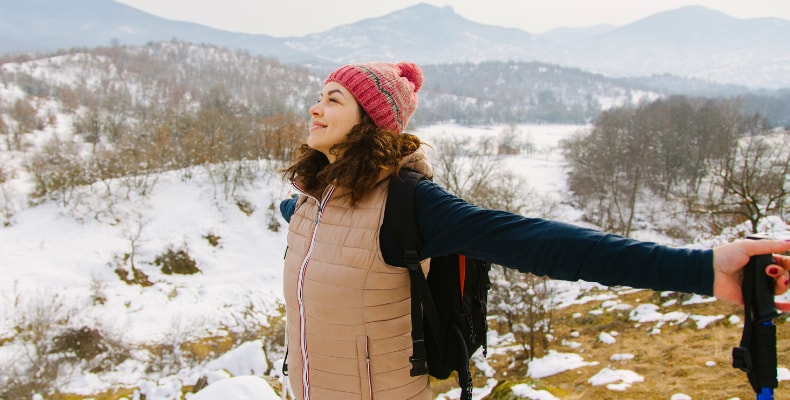
Winter has a reputation problem. It gets blamed for slow mornings, heavy moods, and the kind of afternoons where the sun disappears before your motivation does. But winter is not the villain people think it is. Step outside and walk into a cold trail, and something unexpected happens. Your brain wakes up. Your senses sharpen. The quiet works on you in ways summer noise never could. A winter hike is not about escaping the season. It is about using it. Snow, cold air, and empty paths create a setting that feels stripped down and honest. There is less distraction, less performance, and more presence. What follows are six reasons winter hiking does more than stretch your legs. It gently resets how your mind works, one careful step at a time.
Cold Air Trains Your Brain to Focus Again
Cold air feels sharp when it first hits your lungs, but that sharpness is exactly the point. When temperatures drop, your body responds by becoming more alert. Blood flow increases, breathing deepens, and your brain shifts into a clearer state. This is not about toughness or bragging rights. It is biology doing its quiet work. Winter hiking asks you to pay attention to where you step, how you breathe, and how your body moves. That attention pulls your mind out of endless scrolling and half thoughts. Distractions fall away because the trail demands presence. Over time, this kind of focused movement retrains your brain to stay with one task instead of bouncing between ten. Many hikers notice that their thinking feels cleaner after a cold walk, as if mental fog has been swept aside by the air itself. The chill does not numb you. It wakes you up and reminds your brain what clarity feels like.
Natural Light Resets Your Internal Clock
Winter days are short, and indoor light never quite fills the gap. A hike during daylight helps correct that imbalance. Natural light, even when the sky is gray, sends strong signals to your brain about time and rhythm. These signals help regulate sleep, mood, and energy levels. Walking through a winter landscape gives your eyes a break from screens and artificial glow. Snow reflects light upward, creating a soft brightness that feels calming rather than harsh. This exposure helps your body understand when to be alert and when to rest. Many people find that after a winter hike, they sleep more deeply and wake with less resistance. The trail becomes a kind of reset button for your internal clock. You are not forcing better habits. You are letting daylight guide your body back into balance, one quiet hour outdoors at a time.
Silence Gives Your Mind Room to Breathe
Winter trails are quieter than any other season. Leaves no longer whisper, insects are gone, and fewer people wander out. What remains is a rare kind of silence that does not feel empty. It feels spacious. This quiet allows your thoughts to stretch out instead of colliding. Problems that felt heavy indoors often shrink when carried through still air. Without constant noise, your brain stops bracing itself. Stress hormones ease. Your thoughts slow down enough to make sense again. Many hikers describe winter silence as a mental breathing room. It is where ideas settle and emotions loosen their grip. You may even find yourself laughing at worries that felt serious an hour earlier. The humor sneaks up on you. Silence, it turns out, has a sense of timing. It knows when to let your mind rest and when to nudge it toward clarity.
Physical Challenge Lifts Mood Without Overload
Winter hiking offers effort without excess. Cold weather keeps you from overheating, while uneven terrain engages muscles gently but fully. This balance creates a steady release of endorphins that lifts mood without leaving you drained. Unlike intense gym sessions, a winter hike feels cooperative rather than competitive. Your body works with the environment instead of against it. The result is a sense of accomplishment that feels earned but not exhausting. Even short hikes can improve mood for hours afterward. There is also something quietly funny about discovering how capable your body is when conditions are less comfortable. You realize you are stronger than you assumed, and that realization sticks. Confidence grows, not from pushing harder, but from moving steadily forward. The trail teaches you that progress does not need to be loud to be real.
Preparation Builds Confidence Before You Even Step Outside
Winter hiking begins before the trailhead. Packing layers, water, and gear becomes part of the mental shift. Preparation creates intention. When everything has its place, your mind relaxes. For those who drive to trailheads, having reliable storage matters more in winter when space fills quickly with boots, bags, and extra clothes. A sturdy setup like the Fleximounts HB60 60" Hitch Mount Cargo Carrier Basket+ 56" Waterproof Cargo Bag makes preparation feel simple rather than stressful. The heavy-duty steel construction handles bulky gear with ease, while the waterproof bag keeps everything dry and contained. Improved ground clearance from the 2" shank rise helps when roads are uneven, and the anti-rust coating stands up to salt and snow. Knowing your gear is secure removes one more worry from your mind. Confidence grows not just from the hike, but from the calm that comes with being ready.
Returning Home Feels Like a Mental Reset
The best part of a winter hike often arrives after it ends. When you return home, warmth feels earned, food tastes better, and rest feels deeper. Your brain carries the calm of the trail indoors. Tasks that once felt annoying seem manageable. Conversations feel lighter. There is often a quiet laugh at how simple the solution was. Walk outside, move your body, breathe cold air, and let silence do its work. Winter hiking does not promise instant happiness, but it offers something better. It offers steadiness. Each hike becomes a small ritual of care for your mind. Over time, these moments add up. The season no longer feels like something to endure. It becomes something you understand. And when winter finally loosens its grip, your brain remembers what it learned out there on the trail. Slow down. Pay attention. Keep walking.


