


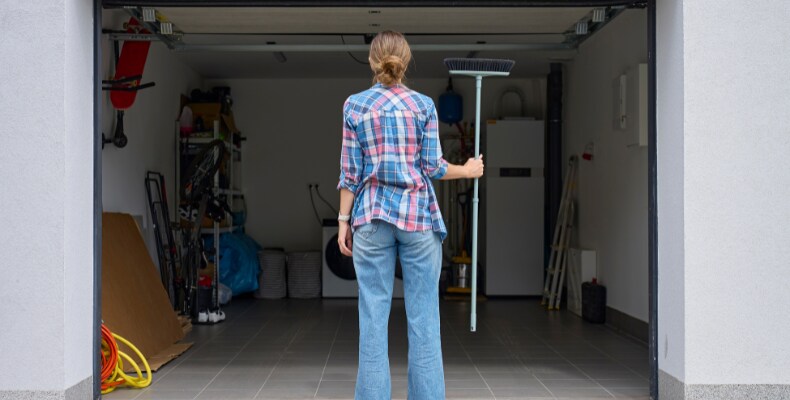
A well-organized garage can make everyday life feel surprisingly lighter. When tools, equipment, and household supplies have clear places to live, finding what you need becomes easier and the space feels more useful. A few thoughtful storage changes can turn wasted corners and empty walls into practical areas that keep clutter under control.
These seven simple garage organization hacks focus on one idea: give every item a place that makes sense. When storage becomes easy to reach, easy to see, and easy to maintain, tidying up stops feeling like another chore.
1. Give the Garage Floor a Break
The garage floor is valuable real estate, yet it is often the first place where clutter lands. Boxes get stacked in corners, tools are left beside the workbench, and seasonal equipment slowly spreads into walking paths. One of the easiest ways to change the room is to move storage upward.
Wall-mounted storage can turn empty vertical space into useful storage without taking up another section of the floor. Fleximounts wall shelving, for example, can provide a dedicated place for containers, tools, supplies, and household items. Instead of scattering belongings across the garage, you can keep them together and within sight.
Vertical storage also creates clearer pathways. That matters because a well-organized garage should not merely look tidy; it should be easy to move through. When the floor remains open, parking becomes simpler, cleaning takes less time, and everyday items are easier to find.
2. Look Up Before You Buy More Storage
Most garages have a large amount of unused space above eye level. The ceiling often sits quietly overhead while the floor becomes increasingly crowded. That makes overhead storage one of the most practical ways to create additional room without expanding the garage itself.
Fleximounts overhead garage storage racks can make use of this overlooked area for items that are needed occasionally rather than every day. Seasonal decorations, camping equipment, luggage, and other bulky belongings can be stored above the floor while remaining organized and accessible.
The key is to reserve overhead space for things you do not need constantly. Items used every morning should remain within easy reach. Items used a few times a year can move higher. This simple distinction helps prevent awkward storage decisions and keeps frequently used tools from disappearing behind rarely used boxes.
3. Create a Home for the Things You Keep Losing
Clutter often grows because small items have nowhere specific to go. Tape measures disappear into drawers. Extension cords become tangled piles. Screwdrivers migrate from one corner of the garage to another. When an item has no assigned home, the floor eventually becomes its storage system.
Creating simple zones can solve much of this problem. Keep automotive supplies together, gardening equipment in one area, cleaning products in another, and household repair tools where they can be reached quickly. You do not need complicated labels or an elaborate filing system. The goal is simply to make the next decision obvious.
This works because organization depends less on perfection than on consistency. When every category has a clear location, putting something away requires almost no thought. That is the real advantage. A storage system that demands too much effort will eventually be ignored.
4. Store Seasonal Items According to Their Calendar
Garages become crowded when every season's belongings are treated as if they are needed every day. Winter decorations, beach equipment, holiday lights, gardening supplies, and outdoor furniture can easily compete for the same limited space.
Instead, organize storage around the calendar. Keep current-season items closer to the areas where you can reach them easily. Move off-season belongings to higher shelves or overhead storage until they are needed again. When the season changes, switch their positions.
This approach does more than save space. It reduces visual noise. You are less likely to open a storage bin filled with unrelated objects when the contents are grouped by purpose and season.
Clear containers can make this even easier because you can see what is inside without opening every box. Simple labels help, too. A few words on the outside can save several minutes of searching later, especially when the garage is full of similar-looking containers.
5. Use the Walls for More Than Decoration
Empty walls are among the most overlooked storage opportunities in a garage. A wall does not need to remain a blank surface when tools, equipment, and supplies are competing for floor space.
Fleximounts wall shelving can help transform vertical surfaces into organized storage areas. Shelves are particularly useful for items that are too small to justify bulky floor cabinets but too numerous to leave scattered around the room.
The smartest setup keeps frequently used belongings at comfortable heights while placing heavier or less frequently used items where they will not interfere with everyday movement. Avoid creating shelves that are so deep or crowded that objects disappear behind one another. Good storage should make belongings visible rather than simply hiding them.
Think of the wall as an extension of your storage system. Once you start using vertical space intentionally, the garage can feel larger without changing its actual dimensions.
6. Keep a Small Zone for Everyday Items
Not everything needs to be packed away. In fact, forcing frequently used items into difficult-to-reach storage can make a garage less functional. The trick is to create a small, deliberate zone for things you use often.
This could include a set of basic tools, cleaning supplies, sports equipment, or gardening essentials. Keep those belongings close to the garage entrance or another convenient location. The idea is to reduce the number of steps between needing an item and putting it away.
A good everyday zone should remain compact. If it slowly expands, it becomes another clutter pile. Set a clear boundary and let that boundary do the work. When the area becomes full, it is a signal to remove unused items or rethink where something belongs.
This small habit can have a surprisingly large effect. Instead of turning the entire garage into a grab-and-go area, you create one controlled space that supports daily routines.
7. Make Putting Things Away Easier Than Leaving Them Out
The most effective garage organization system is the one people will actually use. A beautiful arrangement will not last if returning an item to its proper place requires moving five boxes first.
Make storage decisions based on convenience. Frequently used items should be easy to reach. Heavy belongings should have stable storage that does not require awkward lifting. Similar objects should stay together. Shelves and racks should remain accessible rather than packed to their limits.
It also helps to leave a little empty space. A completely full storage system has nowhere to accommodate the next item. A small amount of breathing room gives the garage flexibility and makes it easier to maintain.
The real goal is not to create a garage that looks perfect on one Saturday afternoon. It is to build a system that keeps working on an ordinary Tuesday when you are tired, in a hurry, and looking for a screwdriver. When putting something away is almost as easy as putting it down, clutter has far fewer chances to take over.
A clutter-free garage does not require constant cleaning or an elaborate organizational strategy. It requires thoughtful places for the things you already own. Use the walls. Use the ceiling. Group similar belongings. Keep everyday items close. Store seasonal gear according to when you actually use it.
Most importantly, make the organized choice the easy choice.
That is what turns garage organization from a once-a-year project into a routine that quietly maintains itself. With smart use of Fleximounts wall shelving and Fleximounts overhead garage storage racks, empty vertical and ceiling space can become useful storage while keeping the floor open for the things that matter most.
The best garage hack may be the simplest one: stop asking where you can squeeze another box, and start asking where that box belongs. Once every item has a logical home, clutter has a much harder time coming back.


