


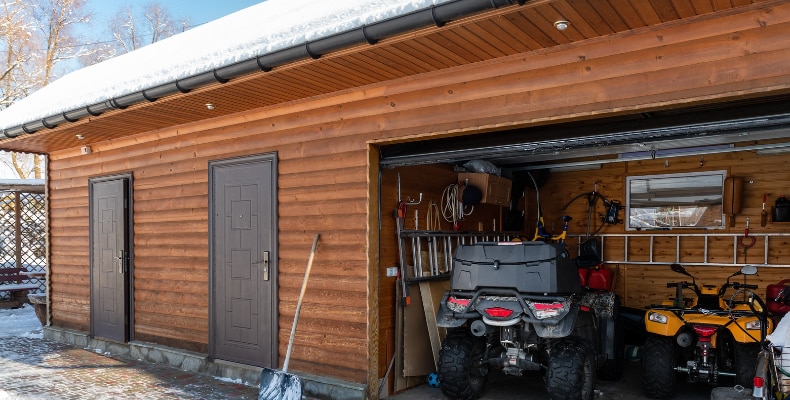
Winter has a way of sneaking into places it does not belong. It settles on your driveway, clings to your roof, and if you are not careful, it marches right into your garage as if it owns the place. Snow is beautiful from the window, but inside your garage it becomes a slow and steady threat. It melts into puddles, seeps into cracks, rusts tools, creates slippery floors, and invites chaos into the one space you swore you would keep organized. The good news is that keeping snow out of your garage is not as hard as winter wants you to believe. You only need a few smart upgrades and a little planning. So here are seven secrets that will help you snow proof your garage before the season settles in for good.
Secret One: Your Garage Door Is Probably Not as Sealed as You Think
Most people trust their garage door a little too much. It looks solid, it sounds heavy, and it rolls down with confidence, but there are small gaps you never notice until winter arrives. Cold air slips through the sides. Snow drifts under the bottom. Moisture crawls through cracks like it is trying to find warmth.
The simplest fix begins with weatherstripping. A fresh seal along the bottom and sides of your garage door can block drafts and stop snow from creeping inside. Over time these rubber strips dry out, crack, or flatten, which means they stop doing their job long before you realize it. Replacing them takes minutes and instantly changes how insulated your garage feels. It is not glamorous, but it is the kind of improvement that quietly works all season long.
Secret Two: The Floor Is Not Just a Floor, It Is Your First Line of Defense
Most garages end up with puddles during winter because the floor was never designed to handle snow melt gracefully. The concrete absorbs moisture. Meltwater spreads out. Salt stains appear like mysterious polka dots you cannot scrub off. The best way to save your floor is to give it a protective layer before winter even starts.
Floor mats help trap slush and salt so it does not reach the concrete. Epoxy coatings add a smooth, sealed finish that stops moisture from soaking in. Even simple containment mats can catch melting snow from your car’s tires so your entire garage does not turn into a winter puddle. Think of the floor as the quiet guardian of your garage. When you take care of it, everything else stays cleaner, safer, and easier to manage.
Secret Three: Your Car Brings More Snow Into the Garage Than the Weather Does
It sounds dramatic, but it is true. Your car is the biggest snow delivery service in your life during winter. Every time you park inside, the snow stuck to your tires and wheel wells melts into a small lake around your vehicle. Then it spreads. Then it freezes overnight. Then you suddenly have a skating rink where you normally walk.
The secret is to create a designated melt zone. Place containment mats where your car parks or use a floor tray that collects melting snow so it does not escape into the rest of the garage. If you want to take it a step further, install a small air dryer or dehumidifier to help reduce moisture. It may sound like overkill, but it works wonders for preventing rust and mold while keeping your storage clean.
Secret Four: If You Are Not Using Overhead Storage, You Are Making Winter Harder
Here is the part most people overlook. Snow in the garage is a problem, but clutter makes that problem ten times worse. When everything sits on the floor, snow melt has more places to hide, more things to damage, and more surfaces to attack with moisture and salt.
Overhead garage storage changes the entire winter situation. When you lift boxes, tools, decorations, and gear off the ground, the floor becomes open and easier to clean. Meltwater has nowhere to get trapped. Your things stay safer and dryer. Systems like ceiling mounted racks or double tiered overhead platforms let you store bulky items high above the mess winter brings.
It is a simple switch. Lift the clutter and you lift the stress. Suddenly your garage feels bigger, clearer, and almost peaceful, even when snow is falling nonstop outside.
The Fleximounts GR 2 Tiers Series Double Layer Overhead Garage Storage Rack becomes even more valuable once winter rolls in and snow starts threatening your garage space. Instead of letting meltwater creep toward boxes and gear on the floor, you can lift everything safely overhead, where the dual layer rack keeps belongings dry, organized, and out of the winter mess. Built from premium steel and tested up to 1760 to 2000 pounds, it stays steady even in cold, damp conditions, thanks to reinforced diagonal bars and anti sway brackets. Its adjustable 37 to 69.5 inch height makes room for bulky winter gear, from sleds to snow shovels, while the top shelf protects items you want far away from moisture. With a welded grid, corrosion resistant finish, and easy installation, this rack helps winter proof your garage by turning vulnerable floor clutter into elevated, snow safe storage.
Secret Five: Your Walls Might Be Letting Cold In Even If They Look Fine
Garages are often the least insulated part of a home. Builders focus on the main house, not the car-sized box attached to it. That means winter air slips through the walls without much resistance. You may not feel it right away, but your tools will. Your stored belongings will. Even the temperature in the rooms beside the garage can drop because the insulation is weak.
Adding insulation is one of the most powerful ways to snow proof your garage. Foam boards, spray foam, or traditional fiberglass all work well, depending on your walls and budget. The result is immediate. The garage stays warmer. Snow melts slower. Moisture evaporates faster. It is one of those upgrades that makes your garage feel like an actual part of your home rather than a cold storage box.
Secret Six: Melting Snow Needs a Place to Go, And Right Now It Probably Does Not Have One
Most garages are perfectly flat. It looks nice and even, but it is not ideal for winter. Meltwater spreads out and pools in every direction, which means you get wet corners, slippery pathways, and hidden moisture under anything on the floor.
Installing a small floor drain or improving the slope of your garage floor can transform the way water behaves. Instead of wandering, it leaves. Instead of pooling, it flows. If a drain is not an option, even small adjustments like adding rubber edging or guiding mats can help direct water away from storage areas. Water may be stubborn, but with just a bit of planning, you can teach it where to go.
Secret Seven: The Air Inside Your Garage Might Be Making the Snow Problem Worse
Moisture hangs in the air longer during winter because cold air holds water differently. If your garage does not have proper airflow, humidity climbs higher than it should. That moisture then settles on tools, boxes, shelves, and the floor. Sometimes it even freezes on surfaces, which feels like a winter prank no one asked for.
A small ventilation system or even a well-placed exhaust fan helps circulate the air and keep humidity low. A dehumidifier works well too. When the air is dry and moving, snow melts cleaner and faster instead of lingering like a guest who refuses to leave.
The Winter Garage That Actually Works
Snow proofing your garage is not about making it perfect. It is about making it ready. A little insulation, a few smart upgrades, some overhead storage, and a more intentional setup can turn your garage into a winter friendly space instead of a cold, wet, slippery mess. Winter might be loud and relentless, but your garage can stay calm and controlled with these seven secrets. The season will still be cold, but your garage will stay warm, clean, and ready for whatever rolls in on your tires.


