


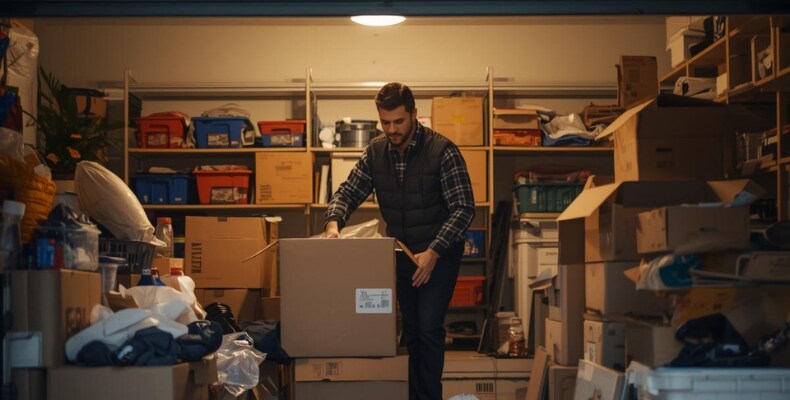
Does your garage feel like a quiet archive of everything you once needed but no longer touch? The door lifts, light spills in, and what you see is not space but layers of postponed decisions. Boxes stacked on boxes. Equipment that once carried purpose now sits without a role. Your car waits outside, exposed to rain and cold, while inside, the square footage you pay for is held by objects that no longer serve you. This is not a space problem. It is a clarity problem. And clarity can be built, one honest decision at a time.
A garage should be more than a holding zone for forgotten things. It can be a working space, a place for projects, a place that feels useful the moment you step into it. But before organization comes subtraction. Before shelves and systems, there is a simple question that cuts through the noise. Why do you still have these? When you answer that question truthfully, you begin to see what is worth keeping and what is quietly taking up room in your life.
The rule is simple and surprisingly powerful. If you have not used it in a year, its role has likely ended. Seasons have come and gone. Needs have changed. Life has moved forward. Holding on does not preserve value. It delays a decision. And delayed decisions fill rooms. The process begins when you bring everything into view. Use your driveway or yard as a temporary staging space. Move items out, group them, and let your eyes adjust to the volume. Patterns will appear. You will start to recognize what is useful and what is only familiar. That is where change begins.
Unused Sports Gear: When Memories Take Up More Space Than Movement
Unused sports gear often carries more emotion than function. A dusty basketball, a worn glove, a pair of skates that no longer fit. These items tell stories of weekends, effort, and small victories. That is why they stay. Not because they are needed, but because they remind you of a time that felt active and full. But memory does not require storage space. The value of those moments is not stored in rubber or leather. It lives in you. And when equipment sits untouched for years, it shifts from being a reminder to being a barrier.
Letting go of unused sports gear does not erase the past. It gives the object a future. Somewhere nearby, a child may want to play but lacks the means. A community center may need equipment. A neighbor might be starting fresh. When you donate, you extend the life of the item in a meaningful way. It becomes active again. It moves, it is used, it creates new memories. That is a better outcome than letting it fade into the background of your garage.
There is also a practical layer to this decision. Sports gear takes up irregular space. It does not stack well. It spills into corners. It creates visual clutter that makes the entire room feel smaller than it is. When you remove it, you do not just gain square footage. You gain mental space. The room becomes easier to understand. You can see the floor. You can plan what belongs where. The environment starts to support you instead of slowing you down.
If you are unsure about an item, test your reasoning. Ask yourself when you last used it and when you realistically will again. Not a hopeful answer, but a grounded one. If the answer is vague, that is your signal. Keep only what fits your current life, not a version of your life that may or may not return. This is how your garage begins to reflect who you are now, not who you were years ago.
Excess Paint Cans: Small Leftovers That Quietly Become a Bigger Problem
Excess cans of paint tell a different story, one that mixes intention with neglect. Each can represents a project completed, a wall refreshed, a decision made about color and space. But once the job is done, the leftovers often stay behind. They line shelves or sit on the floor, waiting for touch-ups that rarely happen. Over time, temperature changes affect them. The texture thickens. The color separates. What once felt useful becomes unreliable.
Paint is not just clutter. It is material that needs attention. Many types contain chemicals that require proper disposal. Leaving them to age in your garage is not harmless. It creates risk for spills, fumes, and environmental harm if they are discarded incorrectly. The responsible path is also the simplest. Check your local waste guidelines and follow them. Many areas offer specific drop-off programs for paint and other household chemicals. When you use them, you protect both your home and your community.
Keeping a small, clearly labeled amount of paint for true touch-ups can make sense. But that is different from holding onto every can from every project. Be selective. Choose what has a clear purpose and let go of the rest. This is not about waste. It is about intention. When you keep less, you manage better. When you manage better, your space stays usable.
Clearing out old paint also changes how your garage feels. Shelves become lighter. Surfaces open up. You reduce the number of items that require careful handling. The room becomes safer and easier to navigate. And with that shift, you create conditions that make it easier to maintain order over time. Small improvements in visibility and access lead to better habits. Better habits keep clutter from returning.
Cardboard Boxes: The Space You Lose to “Just in Case”
Cardboard boxes are perhaps the most common and the most overlooked space wasters. They arrive with new purchases, protect what is inside, and then stay long after their purpose is complete. Large appliance boxes, electronics packaging, shipping cartons. They pile up because they seem useful. You might need them for a move. You might need them for a return. You might need them someday. But someday rarely comes, and in the meantime, they take up space and collect dust.
Garages are not kind to cardboard. Changes in temperature and humidity weaken it. Edges soften. Surfaces warp. What once felt sturdy becomes fragile. Boxes that you planned to reuse may no longer be reliable when the time comes. They also attract pests and create hidden areas that are difficult to clean. What starts as a practical choice slowly turns into a maintenance issue.
The solution is straightforward. Keep only what you can justify with a clear, near-term need. Break down the rest. Flatten boxes and take them to recycling. Many programs accept large amounts of cardboard and turn it into new material. If you enjoy projects, you can set aside a small amount for crafts or protective layering. But limit it. Give it a boundary. Without limits, cardboard expands to fill any available space.
As you clear it out, you will notice an immediate change. Walls become visible. Corners open up. You regain areas that can now be used for storage that actually serves you. This is the moment when organization becomes possible. Shelving, hooks, and overhead systems work best in spaces that are already simplified. When the excess is gone, every storage solution becomes more effective.
This is where smart storage comes in. The Fleximounts WRC24B Corner 2-Pack 2' x 4' Wall Shelving is a strong example of how to use space you often ignore. Corners are usually wasted, but this system turns them into structured storage that can hold real weight. Its steel build and grid design give it stability, while its flexible setup lets you adjust how you use your wall space over time. Instead of stacking items on the floor again, you lift them, organize them, and keep them visible. That visibility is what helps clutter stay gone.
A well-organized garage does not begin with buying more containers. It begins with removing what does not belong. When you do that, you create a foundation that supports better choices. You see what you own. You know where things go. You spend less time searching and more time doing. The space becomes practical again.
This process is about progress. Each item you release makes the next decision easier. Each cleared area invites a better use. Over time, your garage shifts from being a place you avoid to a place you rely on. It starts to feel like part of your home again, not a forgotten extension.
You do not need a full weekend to begin. You need a starting point and a willingness to be honest. Choose one category. Bring it into the light. Ask the question. Why do you still have these? Answer it clearly, and then act. The space you want is already there. It has just been waiting for you to make room.


