


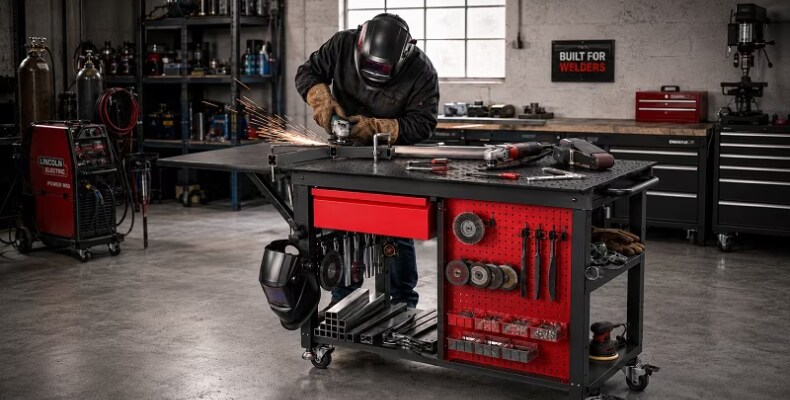
A small workshop often holds bigger ambitions than its floor space allows. One weekend calls for welding a steel frame, the next demands precise plasma cuts, and another invites the quiet satisfaction of shaping wood into something useful. Yet fitting three different workstations into one garage can be expensive, crowded, and impractical. The answer may not be a larger workshop, but a smarter way to use the space already available.
The Fleximounts WB4 48" × 32" Modular Welding Table offers a sturdy starting point for this approach. With a 2,200-pound load capacity, eight independent nitride-treated panels, and a grid of 5/8-inch fixture holes spaced two inches apart, it is designed for demanding metal fabrication. Its modular construction also creates opportunities for carefully planned adaptations.
Turning the WB4 into a hybrid workstation requires more than changing tools between projects. Each discipline brings different demands for heat control, surface protection, workholding, and cleanliness. With the right accessories and a disciplined workflow, one table can support metal fabrication, plasma cutting, and woodworking without compromising the accuracy or safety each task requires.
Build a Reliable Foundation for Welding and Metal Fabrication
Welding is the natural starting point for the WB4. Its rigid frame supports heavy workpieces, while the 5/8-inch holes spaced two inches apart accommodate compatible clamps and fixtures for precise alignment and secure assembly.
The eight independent 6-inch by 32-inch nitride-treated panels resist welding spatter and simplify cleanup. If one panel becomes damaged, replace it individually instead of renewing the entire tabletop, making maintenance more practical and cost-effective.
Keep fixture holes free of debris and inspect the surface regularly for damage or distortion. Use compatible clamps and avoid grinding directly across precision surfaces unnecessarily.
For safer welding, attach the work clamp directly to the workpiece when permitted by equipment instructions. Never assume the table provides a suitable electrical return path. The WB4's integrated outlets, side rail slots, and dedicated torch holder also keep tools organized. Before connecting equipment, verify outlet capacity and electrical compatibility.
Adapt the Table for Plasma Cutting
Plasma cutting produces intense heat, sparks, molten metal, and dross that can damage surfaces and clog fixture holes. Adapting the WB4 for this process requires careful planning to protect its precision tabletop.
A purpose-built steel-slat insert can provide clearance beneath the workpiece and help direct hot debris away from the table. Although the WB4 features eight removable panels, modifications must follow manufacturer guidance and preserve structural support. Protect neighboring panels from excessive heat, and never assume removing panels alone creates a safe cutting area.
The integrated slide-out tray may collect some debris, but it cannot replace a properly designed, heat-rated dross collection system. Allow materials to cool completely before removing accumulated waste.
Ventilation is equally essential. Plasma cutting can release hazardous fumes, especially when processing coated or unidentified metals. Use appropriate local exhaust ventilation and wear suitable eye, face, respiratory, and body protection. With proper safeguards, the WB4 can support plasma cutting while remaining useful for other fabrication projects.
Bring Woodworking into the Workshop
Woodworking requires a clean surface free from sawdust, metal filings, welding residue, and oil. These contaminants can scratch timber or interfere with adhesives, paint, and other finishes.
A removable MDF or plywood topper transforms the WB4 into a practical station for measuring, sanding, and assembling projects. Adding compatible bench-dog holes can accommodate woodworking stops and hold-down fixtures. Ensure the topper fits securely and that its hole pattern matches the intended accessories.
Keep the wooden surface away from welding, grinding, and plasma cutting. Remove it completely before hot-work operations to prevent fire hazards. The WB4's fixture grid can support compatible workholding accessories, while its side rails help organize tools. Before installing a vise or track system, confirm that its mounting method is secure and does not compromise the table's structure.
Use protective pads beneath clamps to prevent scratches and dents. Before placing timber on the table, check for sharp edges, metal particles, and oily residue. A removable topper provides woodworking versatility without permanently altering the metalworking surface.
Control Dust, Sparks, and Electrical Risks
The biggest challenge of a hybrid workstation is preventing one activity from creating hazards for the next. Wood dust is combustible and can ignite when exposed to welding sparks, hot metal, or plasma-cutting debris.
Before hot-work begins, remove sawdust, wood shavings, and flammable finishing products from the area. Keep suitable fire-extinguishing equipment accessible and maintain a fire watch when required.
A consistent cleaning routine makes transitions safer. After metalworking, allow hot components and debris to cool completely before removing dross and cleaning the tabletop. Check fixture holes, clamps, and accessories for sharp metal filings or oily residue before introducing wood. After woodworking, use suitable dust extraction and cleanup equipment to remove dust from the table and surrounding area. Never scatter combustible dust with compressed air.
Electrical safety also matters. Check outlet capacity, grounding, and equipment requirements before connecting tools. Welding systems and plasma cutters can generate electrical interference, so follow manufacturer guidance for cable routing, circuit protection, and safe equipment placement.
Make Modularity Work for Your Workflow
A hybrid workstation saves time when tools, accessories, and materials are organized for quick transitions. The WB4's built-in drawer keeps consumables within reach, while its pegboard and adjustable-height shelves provide convenient storage for tools and parts. Side rail slots keep compatible clamps and squares accessible during detailed work.
Mobility adds flexibility to smaller workshops. The WB4's 360-degree swivel casters are rated for 880 pounds, while its fixed legs support up to 2,200 pounds. Once positioned, extend the leveling feet to lift the casters off the floor and stabilize the table. Follow manufacturer instructions for safe movement and load distribution.
An efficient workflow keeps each setup ready without sacrificing safety. Store welding accessories together, prepare the plasma-cutting insert for installation, and protect the wooden topper between projects. Clearly labeled storage areas also make tools easier to locate.
The goal is not to combine every activity at once, but to create a workstation that adapts efficiently while maintaining the safety and precision each task requires.
Create More Workshop Capacity Without Adding Floor Space
A successful hybrid workshop balances flexibility with safety and precision. The Fleximounts WB4 provides a sturdy foundation for welding and fabrication, while its modular panels, fixture grid, storage features, and mobility support a wider range of projects.
Each adaptation should serve a clear purpose. A properly engineered cutting insert helps manage plasma-cutting debris, while a removable wooden topper creates a cleaner surface for woodworking and assembly. Organized accessories reduce setup time, and regular cleaning prevents metal residue and sawdust from contaminating other projects.
Flexibility also means returning the table to its original configuration when needed. Remove the wooden topper, reinstall the appropriate metalworking panels, and restore the fixture arrangement before welding.
A productive workshop is not defined by its size or the number of benches it holds, but by how effectively its space supports good work. With thoughtful planning, compatible accessories, and consistent safety practices, the WB4 can help a compact garage accommodate welding, plasma cutting, and woodworking without sacrificing control or accuracy.


