


The desert stays with you long after the music fades. It settles into seams, hides in corners, and lingers in the quiet spaces of your gear. After a weekend at Coachella 2026, where crowds moved to the sound of Justin Bieber, Sabrina Carpenter, and Karol G, what follows is not just a return home but a careful undoing of the desert itself. The fine dust of the Polo Fields is not ordinary sand. It behaves like powder, light enough to float, stubborn enough to cling, and sharp enough to wear down fabric and metal over time. Cleaning it is not a chore to rush through. It is a process that asks for patience, a bit of rhythm, and a clear method.
Understanding the Nature of Desert Dust
Desert dust is different from what you brush off after a day at the beach. It is finer, drier, and more invasive. It slips into stitched lines, settles deep into fibers, and finds its way into places you did not know existed. What makes it difficult is not just its size, but how it interacts with heat and movement. Under the sun and constant use, gear expands slightly, allowing dust to move deeper. When it cools, that dust becomes trapped.
This is why a simple shake is never enough. The particles hold onto static and friction, especially in synthetic materials like nylon and polyester. Over time, if left uncleaned, they can weaken fabric coatings and reduce the lifespan of your equipment. Understanding this helps you clean with intention instead of guesswork. Each step you take becomes less about removing dirt and more about preserving what you invested in. The goal is not perfection. It is to remove as much as possible without damaging the materials that carried you through the weekend.
The Tent and Fabric Gear Reset
Start with your tent, the place that held your rest between long nights and early mornings. Set it up fully in an open space, preferably outdoors or in a garage where airflow can carry the dust away. Open every zipper and let the structure breathe. Turn it gently and allow gravity to do its part. You will see the larger grains fall first, followed by a fine cloud that drifts in the light.
After the initial shake, move slowly with a vacuum. Focus on seams and corners where the floor meets the walls. These edges collect the most debris because they act like natural funnels. Use a soft attachment to avoid pulling on the fabric. Once the dry particles are gone, take a damp microfiber cloth and wipe down the interior and poles. The cloth should be just slightly wet, enough to catch dust without soaking the material.
Avoid harsh soaps. They can strip away protective coatings that guard against water and sun exposure. Let the tent air dry completely before packing it away. Any trapped moisture will turn remaining dust into a thin layer of residue that becomes harder to remove later. This step sets the tone for the rest of your cleaning process. Slow, careful, and thorough.
Sleeping Gear and Soft Materials
Sleeping bags, liners, and fabric layers require a softer approach. These materials are designed to trap warmth, which means they also trap dust. Begin by shaking them out in the open air. Let the fabric expand and release what it can naturally. You will notice how much falls away with just movement and time.
When washing is needed, use a front-loading machine on a gentle cycle. Top-loading machines with agitators can stress the insulation and cause uneven wear. Choose a mild detergent made for technical fabrics. This helps remove dust without breaking down the fibers.
Drying is just as important as washing. Use low heat and add a few clean tennis balls into the dryer. As they tumble, they help break apart clumps and release hidden particles. This also restores the loft of the material, making it feel fresh again.
Patience matters here. Rushing the drying process can leave moisture inside, which traps any remaining dust and creates an environment for odor. When done right, your sleeping gear feels light again, free from the weight of the desert.
Electronics, Coolers, and Hard Surfaces
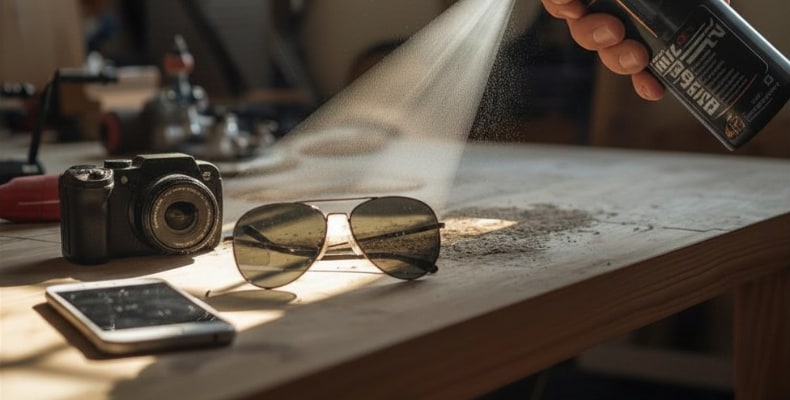
Dust finds its way into electronics with surprising ease. Charging ports, buttons, and small openings become hiding places for fine particles. Start with compressed air, using short bursts to push dust out instead of deeper in. Hold the device at an angle so gravity helps guide the debris away.
For cameras and delicate gear, use a manual air blower first. This gives you more control and reduces the risk of forcing particles into sensitive areas. A soft brush can help remove what remains. Work gently and avoid pressing too hard. The goal is to lift the dust, not grind it further into the surface.
Coolers and storage bins need a different approach. Empty them fully and rinse with a steady stream of water. Let the flow carry out sand from corners and grooves. After rinsing, leave them upside down with openings exposed. Air circulation is key. Even a small amount of moisture can hold onto dust and lead to buildup over time.
Once everything is clean and dry, this is where organization matters. Using systems like Fleximounts helps keep your gear off the ground and away from new dust. Wall-mounted shelves create space and airflow, while sealed containers like Fleximounts Collapsible Plastic Storage Bins with Lids protect your equipment from exposure. Storing clean gear properly ensures you are not repeating the same process again next season.
Zippers, Details, and Long-Term Care
The smallest parts often carry the most damage. Zippers, in particular, suffer quietly. Dust acts like fine grit, wearing down the teeth each time you open or close them. Over time, this leads to resistance and eventual failure.
Cleaning them requires attention. Use a soft brush, like an old toothbrush, with clean water. Gently scrub along the tracks to remove trapped particles. Move slowly and follow the length of the zipper. Once clean, let it dry fully before applying a light layer of lubricant or even a simple wax. This reduces friction and helps the zipper move smoothly again.
These final steps are about care that lasts. They extend the life of your gear and make your next trip easier from the start. When everything is clean, dry, and stored with intention on systems like Fleximounts wall shelves, your garage becomes less of a storage space and more of a reset point.
Cleaning after the desert is not just maintenance. It is a quiet way of holding onto the experience while letting go of the dust that came with it.


