


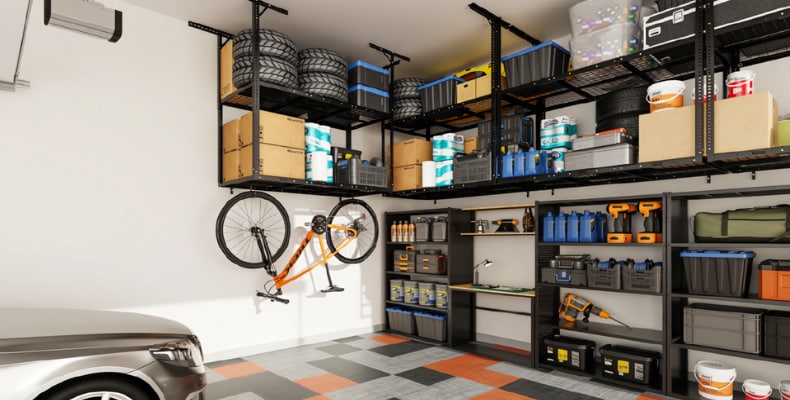
Cleaning a garage sounds simple until you actually open the door. Suddenly, the boxes you forgot about are staring back at you, tools are scattered across every surface, and that one mysterious pile has somehow become part of the architecture. For people who dislike cleaning, the problem is rarely laziness. It is often the sheer size of the task. A messy garage can feel like a weekend disappearing before it even begins. The trick is to stop treating the garage as one enormous cleaning project. Instead, break it into clear steps that give every item a purpose and every space a job. With a little planning, some honest decisions, and better use of vertical space, even the most chaotic garage can become useful again. The goal is not perfection. It is creating a garage that is easier to use, maintain, and live with.
1. Start With One Small Zone
The fastest way to lose motivation is to begin by pulling everything out of the garage. What looks productive for the first hour can quickly become a larger disaster by lunchtime. Instead, divide the garage into smaller zones and work on one section at a time. You might start with the area around the entrance, one wall, a workbench, or a single corner. The smaller the starting point, the easier it is to build momentum.
As you work, ask a simple question about every item: Do I use this, need this, or genuinely want to keep this? Garage clutter often survives because an object might be useful someday. But “someday” can turn into ten years of storage. If something is broken, forgotten, duplicated, or no longer connected to your life, it deserves a second look. This process also reveals what your garage is actually being used for. Maybe it is a workshop, storage area, parking space, hobby room, or some combination. Knowing that purpose makes the rest of the cleanout much easier.
2. Make Four Decisions Instead of Endless Decisions
A garage cleanout becomes exhausting when every object turns into a philosophical debate. You pick up an old extension cord and suddenly wonder about the last time you used it, whether you might need it in three years, and whether throwing it away somehow means you are wasteful. Avoid the mental marathon. Give yourself four simple choices: keep, donate, recycle, or dispose.
The “keep” category should contain things you actually use or have a clear reason to store. Donations can include usable tools, sporting equipment, household items, or materials that someone else could enjoy. Recycling is useful for suitable cardboard, metal, electronics, and other materials accepted by your local program. Anything damaged beyond reasonable use can go into the disposal category, following local waste rules. The important part is making the decision while the item is in your hands. Do not create a fifth category called “I will think about it later.” That pile is how clutter gets promoted back into permanent storage. Four choices keep the process moving and prevent cleaning fatigue from taking over.
3. Stop Using the Floor as Your Storage System
Once you have removed what no longer belongs in the garage, you may notice something surprising. The garage still feels crowded. That is because cleaning and organizing are not the same thing. You can remove dozens of objects and still have poor storage if everything that remains sits on the floor.
Look upward. Garages often have valuable space above cars, work areas, and walkways that remains completely unused. Overhead garage storage can turn this forgotten area into a practical storage zone without taking more floor space away from your vehicle or projects. The Fleximounts GR-2Tiers Series Double Layer Overhead Garage Storage Rack is designed around this idea. Its two-level design provides separate storage areas, with the upper shelf suited to rarely used seasonal items and the lower shelf keeping frequently needed gear more accessible.
The rack is built from heavy-duty steel and uses diagonal support bars and anti-sway brackets for stability. Its adjustable height, ranging from 37 to 69.5 inches, can accommodate different storage needs in garages with ceilings from around 10 to 15 feet. With a rated capacity of 880 to 1,000 pounds, depending on the configuration, it can hold substantial items such as storage bins, tools, sports equipment, and bulky gear. Using vertical space means the floor can finally become a workspace instead of a storage shelf.
4. Create a Home for Everything You Keep
The final part of organizing is giving every useful item a predictable home. This sounds obvious, but it changes how a garage behaves. When a drill has one place, you know where to find it. When seasonal decorations have a labeled storage bin, you do not need to open six boxes to find them. When sports equipment has a dedicated area, it is less likely to migrate across the floor.
Think about storage according to frequency. Items you use every week should stay within easy reach. Things you use once or twice a year can move higher, farther back, or into overhead storage. Heavy objects should remain where they can be safely lifted and handled, while smaller tools can be grouped together. Clear labels can also save time, especially when several containers look identical.
The goal is not to make the garage look like a showroom. It is to reduce the number of decisions you have to make later. Good organization creates a simple pattern: use something, put it back, and find it again. When the system is obvious, maintaining it takes much less effort. That matters for anyone who hates cleaning because the best garage organization is the kind that prevents another giant cleanout six months from now.
Keep the Cleanout From Becoming a Yearly Ritual
A clean garage does not stay clean because you suddenly become a person who enjoys organizing. It stays manageable because the system makes clutter harder to create. After your initial cleanout, spend a few minutes returning items to their proper places whenever you finish a project. Small resets are much easier than another full weekend of sorting.
Be careful about what comes back through the garage door, too. Before buying another storage bin, tool, piece of equipment, or seasonal decoration, consider where it will live. Storage space is not unlimited simply because the walls and ceiling are available. A good rule is to make every new purchase earn its place.
It also helps to schedule a quick garage check every few months. Look for broken equipment, empty boxes, duplicate supplies, and items that have quietly become unnecessary. Seasonal changes are especially useful reminders. When you bring out winter equipment or summer gear, take a moment to review what you are putting away. This turns garage maintenance into a series of small habits instead of another intimidating cleaning project. The less dramatic the upkeep, the more likely you are to actually do it.
A Garage That Works With You
A garage does not need to be spotless to be useful. It needs to make sense. When the floor is clear, the walls and ceiling carry more of the storage load, and frequently used items are easy to reach, the whole room starts to feel different. You can park the car without moving six boxes first. You can start a project without spending twenty minutes searching for a screwdriver. You can actually see what you own.
The four-step approach is simple: work in small zones, make clear decisions, use vertical space, and give everything you keep a home. The final step is maintaining that system through small resets rather than waiting for clutter to become overwhelming again. For people who hate cleaning, that may be the most important lesson of all. You do not need to love cleaning your garage. You simply need to organize it well enough that you rarely have to clean it from scratch again.


