


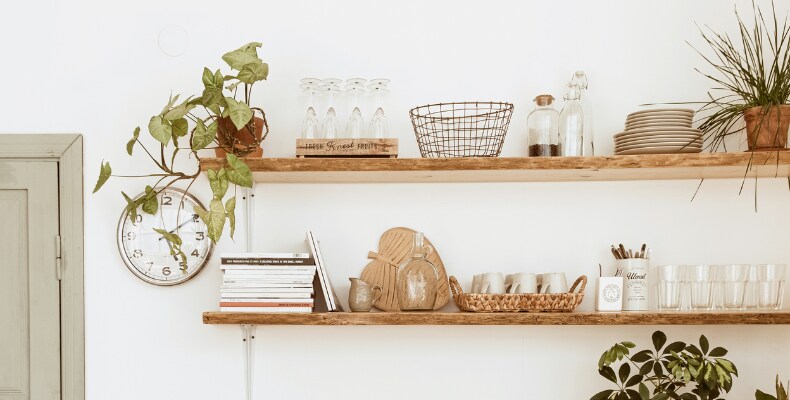
Open shelves can make a room feel lighter, more personal, and more interesting. They give books a place to breathe, let favorite objects become part of the room, and turn an empty wall into something useful. But there is a thin line between a thoughtfully styled shelf and a surface that seems to collect everything you do not know where else to put.
The trick is not to fill every inch. Good shelf styling is less about having more things and more about knowing which things deserve to be seen. When every object has a reason to be there, even an ordinary shelf can feel considered.
The good news is that you do not need an interior designer's eye to get the balance right. You need a few simple principles, a little restraint, and a willingness to leave some space empty. Here is how to create open shelving that looks polished without becoming another place for clutter to gather.
Start With a Clear Purpose for Every Shelf
Before placing a single book or basket on an open shelf, decide what the shelf is supposed to do. This sounds simple, but it can prevent one of the most common styling mistakes: giving the shelf too many jobs at once. A shelf can display books, store kitchen pieces, organize office supplies, or showcase decorative objects. It can do several of these things together, but there should still be a clear idea holding everything together.
Think of each shelf as a small scene rather than a storage bin. Perhaps the top shelf is mostly decorative, while the middle shelf holds books and useful objects. The lower shelf might be reserved for heavier storage. This creates a visual rhythm and makes the entire unit easier to maintain.
It also helps to group similar items. Books can sit together instead of being scattered across every level. Small containers can hold loose pieces that would otherwise create visual noise. When everything has a home, the shelf becomes easier to use and much harder to overwhelm. The goal is not to hide everything. It is to make the things you keep visible feel intentional.
Create Balance With Height, Shape, and Space
A shelf filled with objects that are all the same height can look strangely flat. A shelf filled with objects of completely different sizes can feel chaotic. The sweet spot comes from contrast. Tall books can sit beside a shorter box. A wide object can balance a narrow vase. A stack of magazines can create a low shape beside something that reaches upward.
Space matters just as much as the objects themselves. Empty areas give the eye somewhere to rest. They also make the items you choose to display feel more important. If every corner is occupied, even beautiful pieces can lose their impact.
Try stepping back after arranging each shelf. Look at the whole wall instead of focusing on one object at a time. You may notice that all the heavier pieces have gathered on one side or that the upper shelves feel crowded while the lower ones look bare.
A little movement can solve this. Shift large pieces from one side to another. Leave a small gap between groups. Turn a book stack sideways. Place one object slightly off-center. These small changes create a natural flow that feels relaxed rather than perfectly arranged.
Mix Practical Storage With Personal Details
Open shelving works best when it looks like it belongs to the people who use it. If every object is purely decorative, the shelves may look attractive but quickly become impractical. If everything is purely functional, they can start to resemble a warehouse wall. The answer is to combine the two.
Use attractive storage containers for smaller items that need to stay within reach. Baskets, boxes, trays, and simple containers can keep everyday clutter contained without making the shelf look sterile. Then add a few objects that tell a story about the space. A framed photograph, a favorite book, a small plant, or a piece collected during a trip can make the arrangement feel more personal.
The important part is to avoid displaying everything simply because you own it. Open shelves are not a museum of every object that has ever entered your home. Choose pieces that are useful, meaningful, or genuinely pleasing to look at.
This approach also makes seasonal changes easier. You can swap a few decorative pieces without rebuilding the entire shelf. The practical foundation stays in place while smaller details change with your mood, interests, or the time of year.
Treat the Wall Around the Shelves as Part of the Design
One reason open shelves sometimes look messy is that people style the shelves but ignore the wall surrounding them. The entire area works as one composition. What sits between the shelves, beside them, and underneath them affects how the arrangement feels.
If the shelves are packed with small objects, a quiet wall can help create balance. If the shelves are relatively simple, a larger artwork or framed piece nearby can give the wall more visual weight. The idea is not to decorate every available surface. It is to create a relationship between the shelf and its surroundings.
The scale of the shelving also matters. A long wall shelf can anchor a wide workspace or living area, while smaller shelves can create useful storage without dominating a compact room. Consider what will sit below the shelves, too. A desk, cabinet, sofa, or workbench can influence how much visual weight the shelving should carry.
This is where practical wall shelving can make a difference. The Fleximounts BR24 General 2-Pack Wall Shelving, for example, offers two 2-foot by 4-foot shelves that can carry up to 440 pounds in total. Made from powder-coated steel, these shelves are designed for substantial storage while giving you a sturdy foundation for organizing and displaying everyday items.
Edit Your Shelves Like You Edit Your Closet
The secret to shelves that stay attractive is not perfect styling. It is regular editing. Just as a closet can become crowded with clothes you no longer wear, an open shelf can slowly collect objects that no longer belong there. A receipt holder appears. Then an old charger. Then three boxes that you might need someday. Suddenly, the carefully styled shelf has become the household's unofficial lost-and-found.
Give your shelves a quick review every few months. Remove anything that no longer serves a purpose. Look for duplicates. Ask whether each item needs to be visible or whether it would be better stored somewhere else. If a shelf feels crowded, take everything off one section and start again. You may discover that you like the space more with fewer things.
Do not be afraid of empty space. A shelf with breathing room often looks more sophisticated than one packed from edge to edge. It also makes cleaning easier, which is a practical benefit that deserves more attention.
The best open shelves evolve with the room. They should hold useful things, display meaningful pieces, and make everyday life easier. When you treat styling as an ongoing process instead of a one-time project, your shelves can stay organized without feeling rigid. A little space, a little personality, and a little discipline can turn simple shelving into one of the most useful features in your home.


