


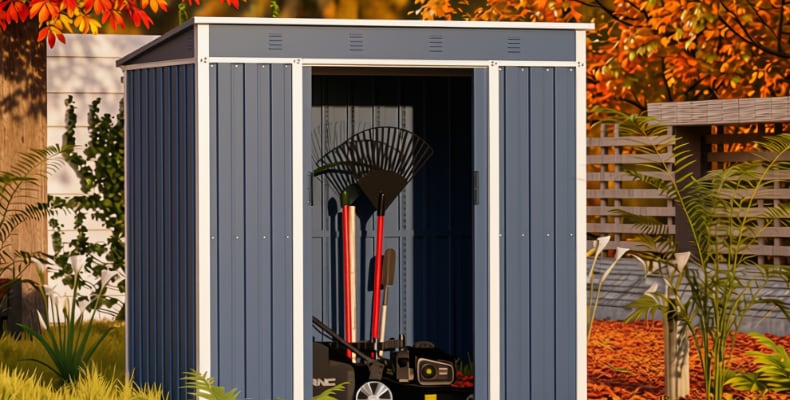
As the days grow shorter and the air turns cooler, the backyard begins to settle into a quieter season. Garden tools are used less often, patio furniture awaits warmer days, and outdoor equipment needs a safe place away from the elements. Preparing your outdoor shed for autumn and winter storage helps protect these belongings from moisture, pests, and weather-related damage while keeping everything organized for the months ahead.
A shed does more than keep things out of sight. It provides a dedicated space for equipment, seasonal decorations, and outdoor furniture. However, poor organization and neglected maintenance can leave stored belongings vulnerable to moisture, pests, and damage. With a little planning, you can turn your shed into a cleaner, safer, and more reliable storage space for the colder months.
Clean Out Your Shed Before Winter
Before storing anything for winter, remove everything from your outdoor shed and inspect the interior. Starting with an empty space makes it easier to spot problems hiding behind boxes and equipment. Look for damp patches, loose panels, damaged flooring, and signs of pests.
Sweep away leaves, dust, and dried soil. Wipe down shelves, clean storage containers, and remove cobwebs from corners. If you notice moisture, investigate the source before returning your belongings. Allow the interior to dry completely to help prevent mold and unpleasant odors.
Next, sort your items into three groups: keep, repair, and donate or discard. Broken tools, empty containers, and unused supplies can occupy valuable space. Keep essential items accessible, while seasonal equipment can go farther back.
This simple cleanout gives every item a purpose and helps you understand how much storage space you actually need. It also creates an opportunity to reorganize the shed before winter makes outdoor chores less appealing.
Inspect the Roof, Walls, Floor, and Doors
Autumn and winter expose outdoor sheds to rain, wind, and changing temperatures. Small maintenance problems can become expensive repairs if they go unnoticed, so inspect the structure before colder weather arrives.
Start with the roof. Remove leaves and twigs that could trap moisture or interfere with drainage. Look for cracks, loose fasteners, and damaged materials. A sloped roof helps rainwater drain away instead of collecting on the surface, but regular inspections remain important.
Check the walls and corners for gaps that might allow water or pests inside. Wooden sheds may need fresh protective treatment, while metal structures should be checked for corrosion and loose connections. Resin sheds also need inspection around their joints and doors, even when their panels are designed to resist weather exposure.
Examine the floor for cracks, soft spots, or signs of water intrusion. A level, stable base supports stored equipment and helps maintain the shed's stability. Test the doors, hinges, and locks to ensure everything works properly.
Finally, clear leaves and debris from ventilation openings. Proper airflow helps manage moisture and reduces the risk of musty smells. Addressing these issues before winter helps keep your storage space in better condition throughout the season.
Prepare Tools, Furniture, and Equipment for Storage
Different belongings need different levels of care before spending several months in storage. Preparing them properly can help prevent rust, mold, and unnecessary wear.
Start with garden tools. Remove soil and plant residue from shovels, spades, and pruning shears, then dry them thoroughly. Apply a suitable protective coating to metal surfaces when needed, and repair damaged tools before storing them. Follow the manufacturer's instructions when preparing power equipment, including draining fuel or storing batteries where applicable.
Patio furniture also needs attention. Clean tables and chairs before covering them, and ensure cushions are completely dry. Store fabrics in suitable containers and avoid wrapping damp items in plastic. Drain garden hoses before storing them away from freezing conditions, and clean bicycles before putting them aside.
Use sturdy, labeled containers for small accessories, gardening gloves, spare parts, and seasonal decorations. Clear labels make finding items easier without unpacking everything. Place heavy equipment on stable, low surfaces, and avoid stacking boxes so high that they become unstable.
Keep wet equipment separate from dry fabrics, paper products, and cardboard boxes. This simple step helps reduce moisture transfer and protects vulnerable belongings.
A little preparation now can save time and money later. When spring returns, your equipment will be easier to find and closer to ready for use.
Organize Your Shed to Maximize Space
A well-organized shed should make everyday tasks easier, not turn finding a garden tool into a frustrating search. Autumn is a good time to rethink your layout because summer equipment is moving into storage while winter essentials may still need to remain accessible.
Group similar belongings together. Keep garden tools in one area, outdoor recreation equipment in another, and seasonal decorations in labeled bins. Install suitable wall hooks for lightweight tools and accessories, ensuring the mounting points can safely support them. Shelves can keep smaller containers off the floor and create more room for larger equipment.
Vertical storage is especially useful in compact backyards. Wall organizers can hold long-handled tools, while suitable racks may accommodate bicycles and other equipment. Always follow installation instructions and weight limits, and keep heavy belongings on stable surfaces.
For homeowners needing more room, the Fleximounts S66 6x6FT Plastic Outdoor Storage Shed offers a dedicated space for lawn mowers, bicycles, garden tools, and patio furniture. Its spacious 6-by-6-foot layout, high ceiling, and open interior help accommodate different storage needs.
The shed features metal-reinforced, multi-wall resin panels designed to provide water resistance and UV protection, along with a reinforced resin floor built to withstand heavy loads. Lockable double doors provide convenient access and added security. Two side windows and a full-length ridge skylight allow natural light inside, while air vents support circulation. Assembly is required, and two or three people are recommended for installation.
Whatever shed you choose, leave a clear walkway and keep ventilation openings unobstructed. Position frequently used items near the entrance so you can retrieve them without moving heavy equipment.
Control Moisture and Maintain Your Shed
Moisture is one of the biggest concerns when preparing a shed for winter. Rain can enter through damaged seals, wet equipment can increase humidity, and temperature changes can cause condensation. These conditions may encourage mold, rust, and unpleasant odors.
Check that rainwater drains away from the shed and that the surrounding ground does not remain saturated. Clear nearby drains and roof edges where applicable. If the shed sits directly on the ground, follow the manufacturer's recommendations for foundations and clearance to help prevent water from collecting underneath.
Before storing belongings, make sure they are completely dry. This includes hoses, tarps, folding chairs, plant pots, and outdoor cushions. Moisture absorbers may help manage humidity in some conditions, but they cannot replace proper ventilation or repairs to leaks. Choose suitable products and follow their safety instructions.
Security matters during the quieter months, too. Lock the doors when the shed is not in use and keep valuable equipment out of easy view. Lockable doors, such as those on the Fleximounts S66, provide an additional layer of protection, although no lock guarantees complete security.
Finally, establish a simple winter maintenance routine. Inspect the shed after storms, remove accumulated leaves, check for pests, and keep vents clear. A quick inspection every few weeks can help you catch small problems before they become serious.
Preparing your outdoor shed for autumn and winter is more than a seasonal chore. It is an investment in the belongings you use throughout the year. With a clean interior, sound structure, organized storage, and proper moisture control, your shed can protect your equipment through the colder months and be ready when spring returns.


