


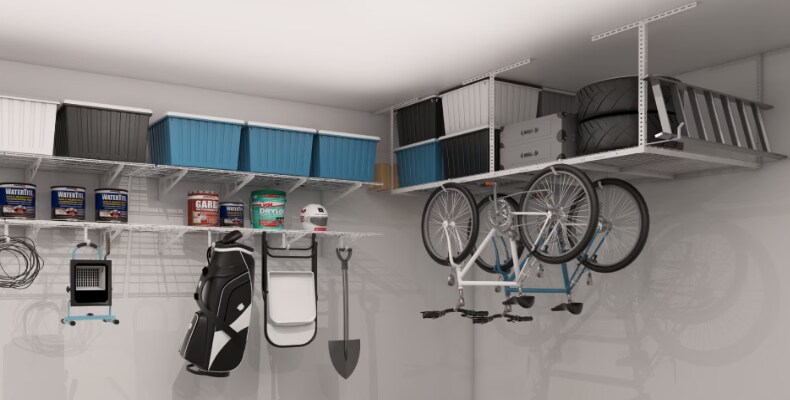
Walking into my garage one morning, I realized that most of my household stress had one thing in common: it was touching the floor. Extension cords sprawled like tangled spaghetti, garden hoses curled around forgotten tools, and folding chairs blocked the path to absolutely everything. Somehow, ordinary belongings had become obstacles to ordinary life. Then I bought a steel storage hook rated for 50 pounds. If a ladder could hang on a wall, why couldn't I lift the rest of my clutter off the ground? That small purchase changed how I viewed storage. Perhaps reclaiming space was less about owning less and more about placing things where they belonged.
Act I: The Gateway Peg
Step 1: The Extension Cord Makeover
Few things test patience quite like an extension cord that has spent months tangled beneath a workbench. Pull one end, and three mysterious knots appear. Toss it back, and tomorrow's problem becomes inevitable. My solution was simple: coil each cord neatly, secure it, and hang it on a suitable hook. This keeps cords visible, accessible, and away from dust and accidental damage. Before mounting anything, check the hook's intended load and make sure the attachment point can support it. A properly organized cord takes seconds to retrieve and even less time to return. Suddenly, the workbench looked less like a problem and more like a workspace.
Step 2: The Garden Hose Intervention
Every summer, my garden hose seemed determined to become a muddy obstacle course. It stretched across the garage floor, collected dirt, and somehow found its way around whatever I needed to carry. Hanging it changed the routine. After draining the hose, I coiled it loosely and placed it on a suitably sized hook, avoiding tight bends that could damage the material. The floor became clearer, and the hose was easier to find before watering the plants. A broad, smooth support helps prevent kinks and unnecessary strain. Best of all, the arrangement looked surprisingly professional. Apparently, a tidy garden begins before you even step outside.
Act II: Escaping the Garage
Step 3: The Heavy-Duty Kitchen Pivot
Kitchen cabinets have a curious habit of filling themselves. Cast-iron skillets, Dutch oven lids, and bulky cookware compete for every available inch, turning dinner preparation into a search mission. Moving selected items to a nearby utility wall can free valuable cabinet space, provided the location is appropriate and the mounting system is designed for the load. Sturdy hooks or a dedicated cookware rack can keep suitable pieces accessible without stacking them precariously. However, cookware should remain in a clean, dry area away from contaminants, and heavy items must be secured properly. This is not about hanging everything in sight. It is about making frequently used belongings easier to reach while keeping the kitchen functional.
Step 4: The Off-Season Wardrobe Bracket
Winter coats have a talent for occupying an entire closet even when the weather makes them unnecessary. Add ski boots, bulky jackets, and equipment bags, and the spare room becomes a storage warehouse. A dedicated utility area offers another option. Vinyl-coated hooks or suitable wall-mounted brackets can hold selected seasonal gear without scratching delicate surfaces. Before hanging heavy bags, check the product's load rating and mount it according to the manufacturer's instructions. Keep clothing away from moisture, fumes, and dusty workshop materials. With off-season belongings stored neatly outside the main wardrobe, everyday clothes gain breathing room. Getting dressed becomes easier when your closet no longer resembles a mountain expedition.
Step 5: The Suspended Pantry Experiment
Paper towels, recycling bags, and dog toys are not particularly exciting purchases, but they occupy a surprising amount of space. Wire mesh baskets suspended from compatible hooks can gather these supplies into convenient storage zones. Lightweight goods remain visible, while frequently used items stay within easy reach. The trick is to group belongings by purpose instead of creating one enormous basket of miscellaneous objects. Keep pet supplies separate from household chemicals, and avoid placing food or sensitive materials in dusty garage areas. Mesh baskets also make it easier to see when supplies are running low. A little vertical organization can transform forgotten corners into useful storage without requiring expensive cabinets or a major renovation.
Act III: Pushing the Physics
Step 6: The Ceiling Hoist
Few storage ideas feel as daring as suspending a mountain bike or kayak above a parked car. The freed floor space is tempting, but overhead storage demands careful planning. A ceiling hoist must be specifically designed for the item's weight, dimensions, and intended mounting surface. Ceiling joists, fasteners, and lifting mechanisms all need suitable capacity, and the installation must follow the manufacturer's directions. Never assume that an ordinary hook can support a suspended vehicle or boat. Keep the load away from people and ensure that it cannot fall onto the car below. When installed correctly, overhead storage can reclaim valuable space. When installed carelessly, it creates a serious hazard. Physics still has the final say.
Step 7: The Folding Furniture Wall
Folding chairs and card tables are useful until guests leave and there is nowhere to put them. Instead of stacking everything against the wall, I began looking upward. Suitable wall-mounted hooks can hold compatible folding furniture vertically, leaving the walkway open and making individual pieces easier to retrieve. Check the furniture's weight, shape, and balance before choosing a support. The mounting surface must also withstand the load, particularly when several chairs share one storage area. Keep heavy tables secured against slipping, and avoid blocking electrical panels or emergency exits. The result is a garage that feels larger without changing its dimensions. Sometimes, the best renovation is simply moving things out of the way.
Act IV: The Psychological Shift
Step 8: The Twelve-Hook Threshold
By the time twelve hooks had found their purpose, I started eyeing the vacuum cleaner, the ironing board, and practically everything else in the house. This is the danger of discovering vertical storage: once the floor becomes visible, clutter seems personally offensive. Still, more hooks do not automatically mean better organization. Every item needs a suitable support, an accessible position, and enough room to be removed safely. A small planning session can prevent a wall from becoming a crowded collection of hanging objects. I learned to prioritize belongings that regularly obstruct movement or need quick access. The goal was never to hang my entire life. It was to make daily routines feel less complicated.
Step 9: The Joy of an Unobstructed Floor
The first time I swept the garage without moving a single object, I understood the appeal of vertical storage. No extension cord caught the broom. No chair blocked the corner. No garden hose demanded a detour. Cleaning became quicker because the floor was finally available for its intended purpose. An unobstructed surface can also make it easier to spot spills, fallen screws, and other hazards before they become bigger problems. The difference extends beyond cleanliness. A clear walkway makes moving equipment and carrying groceries less frustrating. The space has not grown by a single square foot, yet it feels remarkably different. Sometimes, extra room begins with a simple change in perspective.
Step 10: The Visual Illusion of Order
There is a reason an organized room feels calmer than one crowded with belongings. When objects have designated places, the eyes encounter fewer competing shapes and fewer reminders of unfinished chores. Hanging frequently used tools, sports equipment, and other suitable items can create clearer visual zones while making everyday tasks more predictable. The effect depends on thoughtful arrangement, not simply elevation. Too many objects clustered on a wall can create another form of clutter. Grouping similar belongings and leaving space between storage areas makes the arrangement easier to understand. I began to notice that organization was not about making every surface look perfect. It was about removing small frustrations from routines I repeated every day.
Conclusion: Reclaiming Ground Zero
Step 11: Choosing the Right Hooks
My storage experiment also taught me that not all hooks serve the same purpose. A product's shape, material, load rating, and mounting requirements determine what it can safely hold. The Fleximounts GRH1 4-Pack Flat Hook offers a practical option for compatible Fleximounts ceiling racks and wall shelves. Made from strong steel, it features a scratch-resistant powder-coated finish and requires no additional tools for attachment to its intended compatible systems. It can help organize bikes, tools, and sporting goods when used within the product's specifications. Before purchasing any storage accessory, verify compatibility and capacity. A convenient hook works best when its design matches both the storage system and the item being supported.
Step 12: Making Space for Life
Eventually, the garage stopped feeling like a waiting room for unfinished chores. Tools had designated places, seasonal supplies were easier to locate, and the walkway remained open. I did not need a larger house or expensive custom cabinetry. I needed a plan, appropriate storage hardware, and the willingness to reconsider how I used the walls. Vertical organization will not solve every household problem, but it can make ordinary spaces more practical and pleasant. Life will always bring new belongings, unexpected projects, and occasional disorder. Yet a clear floor offers a small, satisfying advantage: there is room to move, room to work, and room to begin again. Sometimes, a better life starts a few feet above the ground.


