


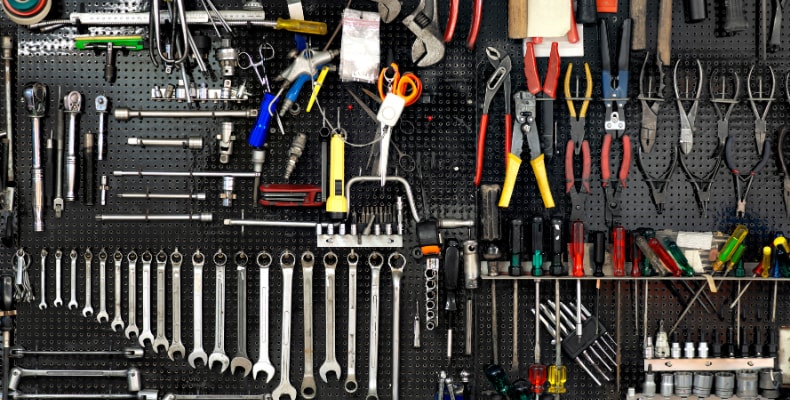
A garage should be a place of confidence. You walk in knowing exactly where the wrench lives, not a room that turns every small repair into a scavenger hunt. Yet most garages quietly train tools to disappear. They slide under benches, drift into boxes, and vanish into corners we swear were empty yesterday. The good news is that lost tools are not a mystery. They are a system problem. When the system changes, the behavior changes. What follows are five secrets that turn a chaotic garage into a space where tools stay put, stay visible, and stay ready. These are not grand renovations or expensive overhauls. They are small, deliberate shifts that add up to calm, order, and a garage that finally works with you instead of against you.
1. Chaos Is Not a Personality Trait, It Is a Layout Problem
Most garages look messy because they were never designed to think like a workspace. They were treated like storage with a door. Tools get tossed wherever there is space, which teaches your brain nothing about where they belong. The first secret is to admit that clutter is not about discipline. It is about poor layout. When tools do not have clear zones, they wander. When zones are defined, tools behave.
A functional layout groups tools by task, not by size or brand. Drilling tools belong together because they solve the same problem. Painting tools belong together because they share cleanup needs. This reduces the number of places a tool could be, which instantly cuts search time. Visibility matters too. If you cannot see a tool without moving three other things, your system is already broken. Open storage near eye level works better than deep bins on the floor.
Lighting also plays a quiet role. A dark corner becomes a hiding place. Bright, even lighting keeps tools visible and keeps you honest about what is out of place. When the layout makes sense, tools stop wandering because there is nowhere logical for them to go except home.
2. If Everything Is Stored Everywhere, Nothing Is Stored Anywhere
The second secret is uncomfortable but freeing. Storing tools in multiple places guarantees they will be lost. Duplication creates confusion. Confusion creates clutter. Many garages fail because the same type of tool lives in three different spots depending on mood, weather, or how tired someone was that day.
A single home for each tool category is not rigid. It is kind. It reduces decisions. When you finish a job, your brain already knows where the tool goes. That habit compounds. Over time, returning tools becomes automatic rather than aspirational.
Clear labeling helps more than people expect. Labels are not about aesthetics. They are about memory. When labels are simple and visible, anyone can put a tool back correctly, including future you who is in a hurry. Transparency helps too. Containers that show what is inside reduce rummaging, which is where disorder begins.
This secret is about restraint. Fewer storage locations, fewer choices, fewer lost tools. The garage becomes easier to use not because it is perfect, but because it is predictable.
3. Rolling Storage Is Cheating, and That Is Why It Works
Fixed storage assumes you always work in one spot. Real life disagrees. Projects move. Needs shift. This is where rolling storage earns its place without drama. A mobile tool chest keeps tools close to where the work is happening, which drastically reduces the chance they get set down and forgotten.
The Fleximounts TC5 5-Drawer Metal Rolling Tool Chest is a practical example of this idea done right. With five drawers and seven storage boxes, it gives each tool a defined home without asking you to stack or squeeze. Ball-bearing slide rails make drawers open smoothly, which matters more than it sounds. When access is easy, tools get returned. The steel construction with a powder coat finish holds up to real use without looking tired. Locking swivel casters keep it stable when parked and mobile when needed. The built-in lock adds peace of mind, and the design works just as well in a home garage as it does in a professional space, even doubling as functional furniture.
Rolling storage reduces tool loss by shortening the distance between use and return. When the chest follows the work, tools stop drifting.
4. Your Memory Is Not a Storage System, and It Never Was
Relying on memory to track tools is a losing strategy disguised as confidence. Even the most organized person forgets where things go when tired or distracted. The fourth secret is to externalize memory. Let the garage remember for you.
Outlines, shadows, and simple visual cues are powerful. When a space shows what belongs there, absence becomes obvious. This is not about perfection. It is about feedback. When you can see that a tool is missing, you are more likely to retrieve it before the job ends.
Routine matters as much as design. A five-minute reset after each session prevents chaos from compounding. This habit works because it is short. Long cleanups fail. Short ones stick. Pair the reset with music or a podcast and it becomes a closing ritual rather than a chore.
Education lives here, too. Teaching everyone who uses the garage how the system works protects it. A shared understanding keeps tools from migrating and keeps frustration low.
5. A Tidy Garage Is Not About Looks, It Is About Time
The final secret reframes the goal. Organization is not about impressing anyone. It is about reclaiming time and attention. Every minute spent searching is a minute stolen from the work or from rest. A tidy garage quietly gives that time back.
When tools never vanish, projects start faster and end cleaner. Small repairs feel lighter. Big projects feel possible. The space becomes inviting rather than intimidating. This changes how often the garage gets used, which reinforces the system even more.
You begin to trust the space. You stop buying duplicate tools because you can actually find the ones you own. You spend less money, swear less often, and finish projects before sunset.
A garage where tools never vanish is not a fantasy. It is the result of clear zones, fewer storage locations, smart mobility, visual memory, and respect for your time. Put these secrets to work, and your garage stops being a place where tools disappear and starts being a place where things get done.


